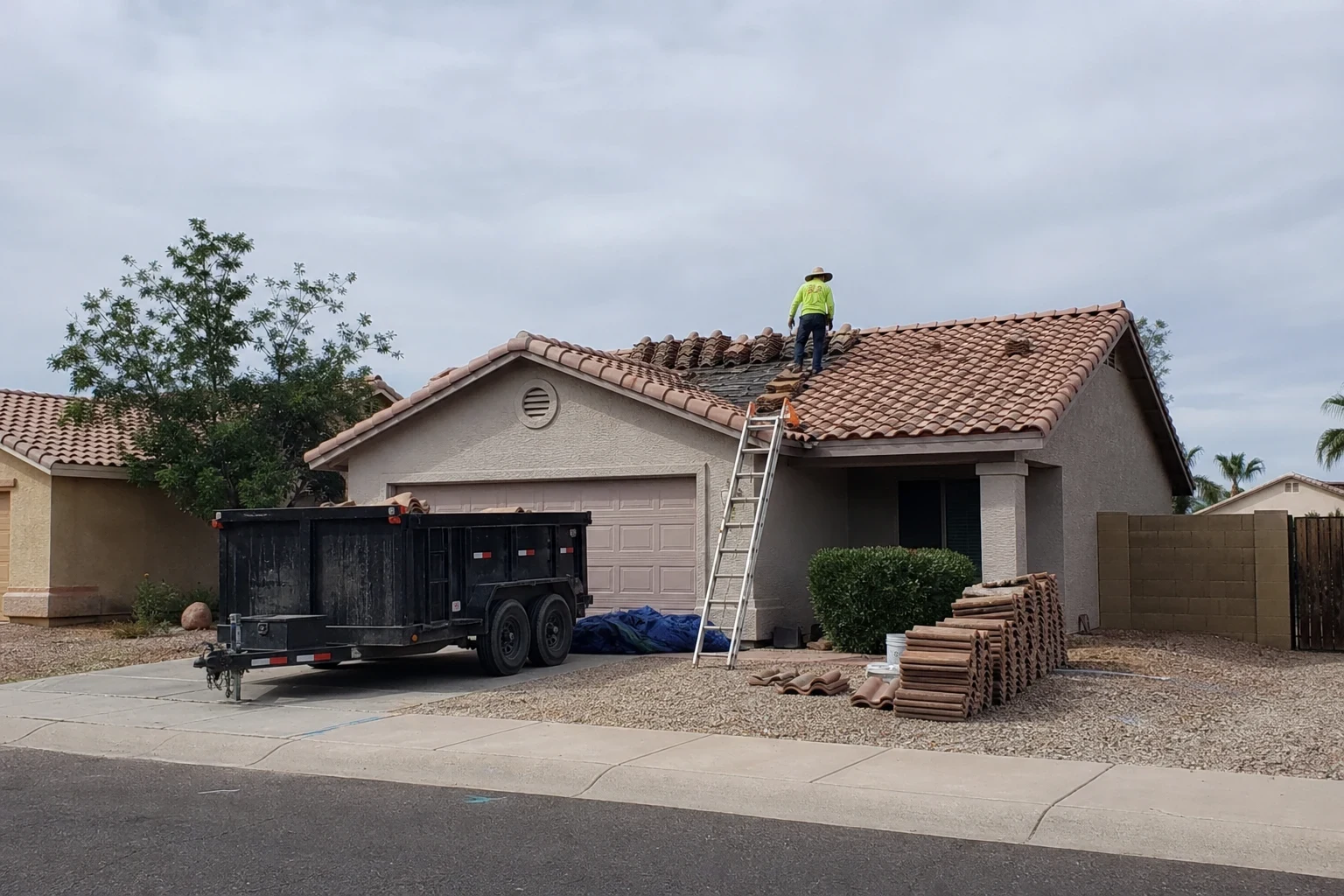
ServicesStorm damage repair
Storm Damage Repair in Buckeye for Monsoon Wind, Rain and Hail
Monsoon microbursts lift ridge tiles, crack concrete tile, crease shingle tabs and drive sheet rain under worn underlayment. We find what the storm actually broke, photograph it and price a repair that fits how many years the rest of your roof has in it.
What storm damage repair covers on a Buckeye roof
Most homes around Buckeye, Goodyear and Surprise have concrete tile over felt or synthetic underlayment. Others carry asphalt shingle, and some have low-slope foam or coated sections over patios and additions. A storm rarely hits all of that evenly. Wind gets under ridge and hip tiles first, flying debris cracks field tiles, and a hard downpour finds any spot where years of desert heat have dried the underlayment until it splits.
Storm damage repair means fixing what that event broke: resetting or replacing tile, replacing creased or missing shingles, resealing flashing, and patching underlayment where water got past. It makes sense when the damage is localized and the surrounding roof still has real life left. When the underlayment is brittle across the whole roof, spot repairs buy only a season or two. In that case we price both the repair and a roof replacement so you can compare cost against years of service before you decide.
If what we find is ordinary aging rather than storm damage, we say so. That work falls under roof repair, and the difference matters if you are thinking about an insurance claim.
What the repair work includes
Tile reset and replacement
We replace cracked and slipped concrete or clay tiles with the closest matching profile and color we can source. Ridge and hip tiles are re-fastened and re-bedded so the next wind gust has nothing to grab. Older discontinued profiles sometimes need salvaged tile, and we tell you up front if that is the case.
Shingle and ridge cap repair
Heat-softened shingles crease when wind folds them back, and a creased tab will not reseal on its own. We replace the damaged tabs and ridge cap, hand-seal them and nail to the manufacturer's pattern.
Underlayment under the damage
On tile roofs the underlayment is what actually keeps water out. We lift the tile around the damaged area, cut out torn or cooked sections, and lap new material into the sound underlayment so water sheds downhill over every seam.
Flashing, vents and pipe boots
Wind-driven rain often enters at headwall and sidewall flashing, valley metal and cracked pipe boots rather than through the tile itself. We reseal or replace these parts as part of the same visit.
Temporary cover when water is getting in
If repairs have to wait on materials, we secure a tarp or temporary underlayment without nailing through good tile.
How to tell a storm hurt your roof
- Pieces of tile on the ground
- Tile corners lying on the driveway, patio or gravel mean something overhead broke or slipped. A single fragment can signal several damaged tiles you cannot spot from below.
- An uneven ridge
- Sight down the peak from the street. Crooked ridge tiles or visible gaps mean the bedding or fasteners have failed, and rain can run right into the ridge.
- Fresh ceiling stains after a storm
- A brown ring that shows up after a monsoon cell usually means water made it to the decking. Look in the attic near the stain for wet insulation or a darkened deck.
- Dings in vents and gutters
- If hail dented metal roof vents, gutters or the fins on your AC condenser, it probably bruised shingles or chipped tile as well.
- Valleys clogged with debris
- Dust storms leave dirt, gravel and palm fronds in the valleys. That pile blocks water and forces it sideways beneath the tile.
How a storm repair job runs
- 1
Roof and attic inspection
We walk the roof, stepping on the lower overlap of each tile where it is supported, and check the attic for wet decking. Every damaged spot gets a close photo and a wider one showing where it sits on the roof.
- 2
Written estimate with your options
You get a line-item estimate for the repair. If the roof is near the end of its service life, we add a replacement price and explain how many years each choice realistically buys.
- 3
Insurance, if you file
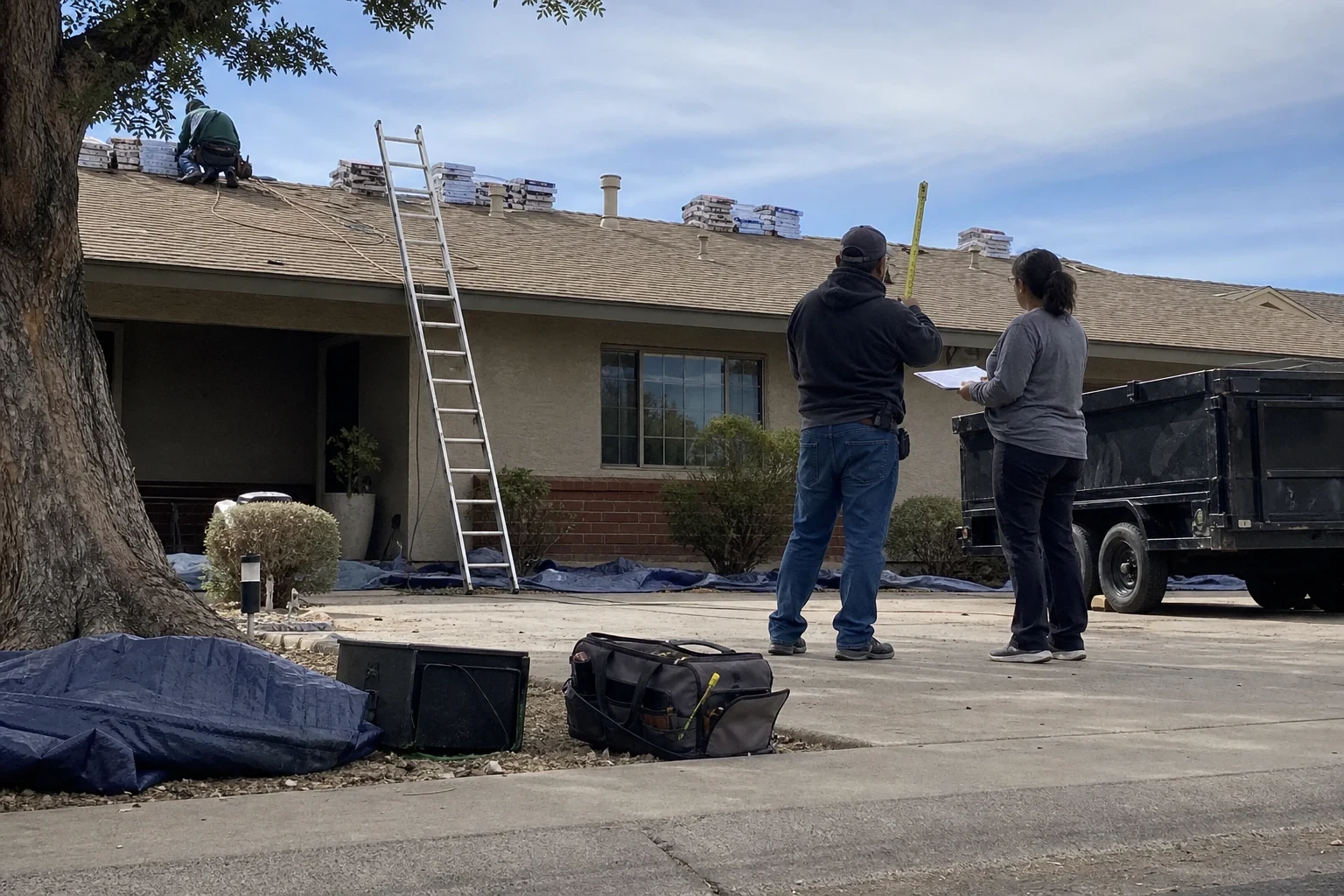
We share the photos and can meet your adjuster on the roof to show what we found. The adjuster and your insurer decide coverage; we explain the process without making that call.
- 4
Repair day and cleanup
We cover landscaping and protect gravel and pavers, remove broken material, repair the underlayment and flashing, then set new tile or shingles. The yard is cleaned and magnet-swept for nails, and you get after photos of the finished work.
What changes the price of a storm repair
Storm repairs on two houses on one block can come in at very different prices. What you can see is just one piece; the layers below and the way the roof was built account for most of the cost. Every item is listed on your written estimate.
- Roof material and tile availability
- A concrete tile profile still in production is easy to match. Clay tile, specialty colors and discontinued profiles take longer to find and cost more per tile.
- How far water got in
- One cracked tile above dry underlayment is a quick fix. If water soaked into the decking, the plywood or OSB has to be replaced, adding labor and materials.
- Slope, height and access
- A steep two-story roof needs more safety setup and slower work than a single-story ranch with a gentle pitch.
- State of the roof around the damage
- When the underlayment near the break is brittle, the new section often has to run past the damage so it overlaps into solid material.
Common storm repair questions
- Is it better to fix the damage or replace the roof?
- The answer rests on the underlayment and decking near the damage, not only the broken tile. When the underlayment has years remaining, repair is generally the better buy. When it is cracking all over, repair money goes into a roof that will soon need replacing regardless. We price both for a side-by-side look.
- Should I call my insurer or a roofer first?
- Plenty of homeowners ask us to inspect first so they know if there is storm damage worth a claim. Our photos give you clear evidence to share with your insurer. Whether to file, and what gets covered, is up to you and your insurance company.
- How quickly after a monsoon should someone look at the roof?
- A few weeks is fine unless water is getting inside. The danger in waiting is the next storm, because a loose ridge tile or open flashing seam lets in more water every time.
- Could you break more tiles walking on the roof?
- Concrete tile breaks when stepped on in its unsupported center. We place our feet on the lower overlap, where the tile sits on the row beneath, and replace any tile that cracks while we are there.
- Will new tile match what I have?
- Generally yes, or nearly so. Arizona sun fades concrete tile, so new pieces may look a bit brighter at first. For discontinued profiles, we hunt for salvaged tile or recommend borrowing matching tile from a less visible slope.
Fix the storm damage before another monsoon cell hits
We will check the roof, photograph everything the storm damaged and hand you a written repair price. Our crews serve Buckeye and nearby towns such as Goodyear, Avondale and Litchfield Park.