Buckeye and West Valley Roofing, Weighed Over the Life of the Roof
We inspect, repair and replace roofs in Buckeye and the neighboring West Valley towns. Every visit ends the same way: what your roof needs now, what it will likely need in five or ten years, and what each option costs you over that stretch.
Towns we cover from Buckeye
Our base is Buckeye, and most of our work sits within a reasonable drive of it. We regularly take jobs in Goodyear, Avondale, Litchfield Park and Tolleson, and we head north to Surprise, El Mirage, Youngtown and Glendale. If your home is in that spread and you are not sure we reach you, ask when you call. We would rather give you a straight answer than stretch a crew too thin.
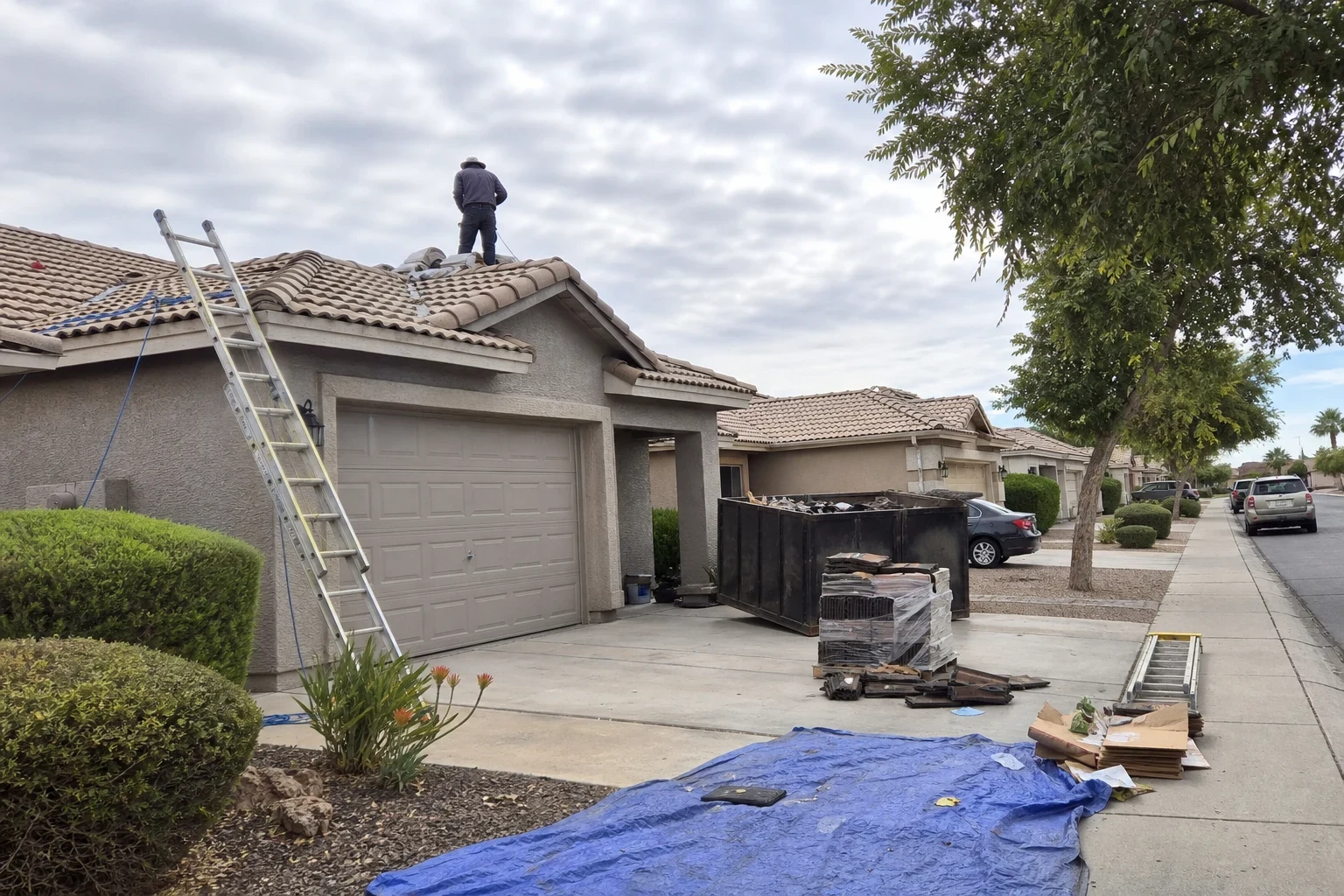
The roofs change as you move across the area. Newer subdivisions in Buckeye, Goodyear and Surprise lean heavily on concrete tile over stucco walls, with asphalt shingle mixed in. Older parts of Glendale, Youngtown and Avondale tend to have more low-slope sections, foam or modified bitumen over flat additions, and shingle roofs that have already been redone once or twice. Each system ages differently, so the right call on one street can be the wrong call a few miles away.
Towns we cover from Buckeye
- Buckeye
- Litchfield Park
- Surprise
- Goodyear
- Avondale
- El Mirage
- Tolleson
- Youngtown
- Glendale
Not on the list? Call (623) 292-8219 and ask.
Conditions West Valley roofs face
- Sun and summer heat
- For months each summer, roof surfaces here get much hotter than the air around them. That heat bakes asphalt shingles dry, splits the sealant at vents and hardens the rubber collars on pipe boots well ahead of what you would see in a cooler place. Sunlight also eats away at the coating on foam roofs, so foam has to be recoated on a regular schedule. Budgeting for that recoat is almost always cheaper than replacing foam that was allowed to go bare.
- Tile and what sits beneath it
- Concrete tile can stay in service for several decades, but the felt or synthetic layer under it tends to wear out sooner. When that layer cracks, any water that gets past the tile lands on the deck. On many tile roofs we can pull the tile, put down new underlayment and set most of the original tile back, which often outlasts a full tear-off. Before we recommend that, we look at broken and shifted tiles, the valley metal and the deck itself.
- Storm season
- Between about July and September, monsoon cells arrive fast with gusts, dust and short bursts of hard rain. The wind peels up shingle tabs and moves loose tile. Dust fills gutters and valleys, so the following downpour backs up under the roof edges. Hail is rarer here but still shows up, and our storm damage repair page covers how we record it.
- City permits and HOA requirements
- Most cities in the metro require a permit to reroof, and some inspect before the finished layer is installed. Plenty of neighborhoods also set HOA limits on tile color and profile. When a job calls for a permit, we pull it, and we help you collect whatever paperwork your HOA wants before we begin.
Find out where your roof stands
We will look at your roof, show you photos of what we found and lay out your options by up-front cost and expected life. A roof inspection is usually the best first step.