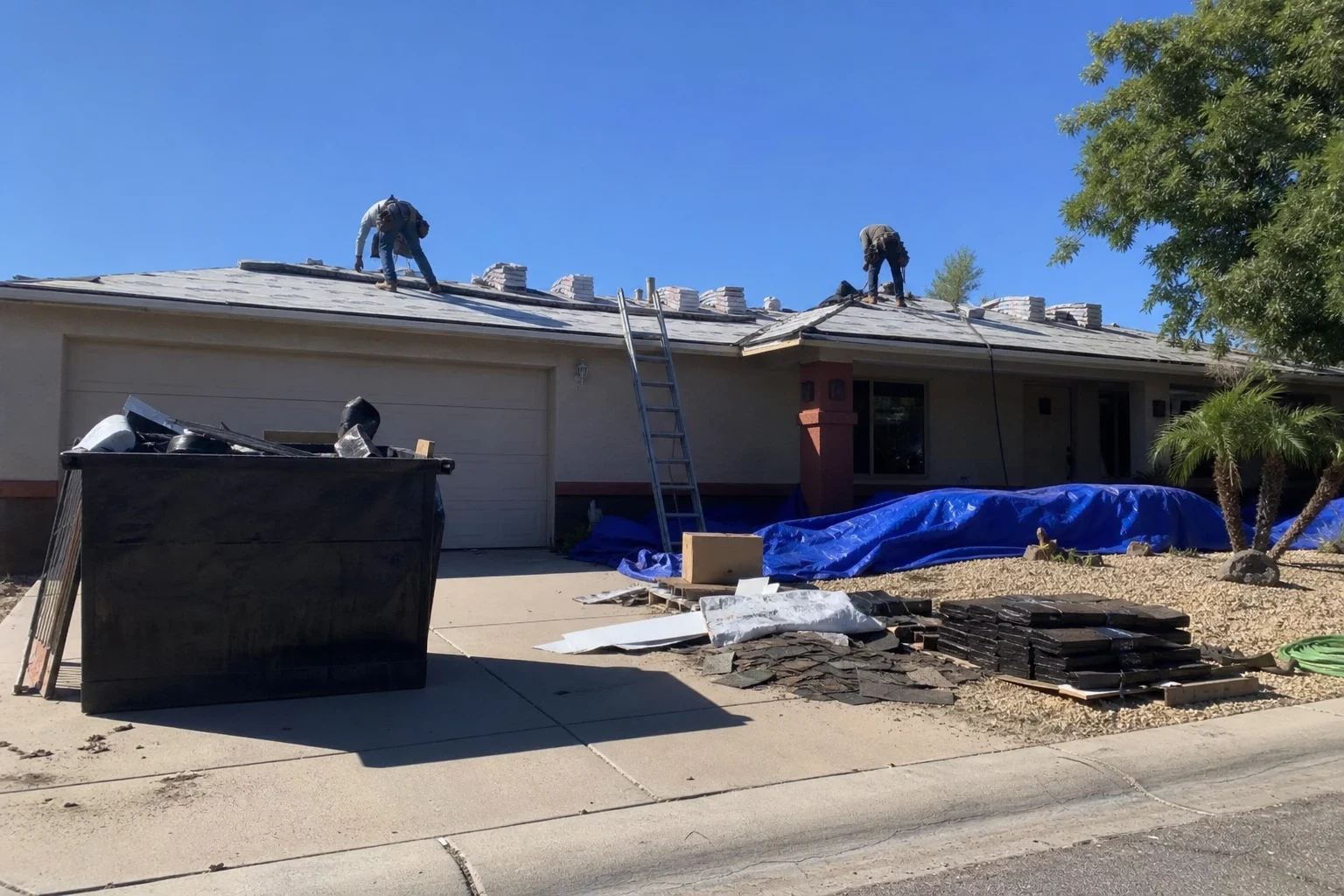
ServicesRoof replacement
Roof Replacement in Buckeye, Matched to How Long You Plan to Stay
When repairs stop making sense, we replace the roof with a system chosen for desert sun, monsoon wind and the years you expect to own the house. You get a written comparison of materials showing what each costs now and what each will ask of you later.
Why Desert Roofs Usually Fail From the Bottom Up
Most roofs around Buckeye do not wear out where you can see them. Concrete tile can outlast the mortgage, but the felt underlayment beneath it bakes under summer attic heat, turns brittle and splits along the battens. Once that layer goes, water from a monsoon downpour runs straight past the tile onto the decking. Asphalt shingles fail more visibly, shedding granules and curling as UV breaks down the asphalt binder.
Replacement is the right call when that damage is spread across the roof: leaks showing up in new places each season, underlayment cracking on several slopes, or decking that flexes underfoot. If the trouble is one slope, a cracked ridge or a failed pipe boot, roof repair costs far less, and we will tell you that plainly.
The cheapest bid is not always the cheapest roof. We look at what a system costs per year of service, including the upkeep it will need, so the choice still looks right fifteen or twenty years from now. Sometimes that means a tile lift-and-relay that reuses your sound tiles over new underlayment. Sometimes it means a different material altogether.
What Comes With a Complete Replacement
Stripped down to the deck
The old roofing, underlayment and fasteners all come off until bare sheathing shows. Putting new material over a failed layer conceals damage and holds in heat, so we skip that shortcut.
Deck inspection and sheet replacement
Once the deck is bare, we walk each sheet and probe for soft areas, which tend to sit near eaves, valleys and past leaks. Rotted or separating plywood or OSB is removed and replaced before the new roof goes down, and we take photos of it.
Heat-rated underlayment
Beneath tile we use a high-temperature synthetic or two-ply system instead of ordinary felt, plus self-adhered membrane at valleys and penetrations. Since this layer is what stops water, it gets our most careful work.
All-new flashing and penetrations
We put in new pipe jacks, step and headwall flashing, valley metal and eave bird stop rather than reusing the old pieces. Flashing that has already been bent seldom seals properly a second time.
Attic airflow check
We compare intake at the eaves with exhaust at the ridge or roof vents. Weak airflow bakes underlayment and shingles from underneath and raises cooling bills.
Daily cleanup and final walk
Each day's debris is loaded into a dumpster or trailer, and a magnetic sweeper goes over the driveway, yard and planting beds before we head out.
Signs Your Roof Is Past Repair
- Brittle underlayment between the tiles
- If you can see dark, cracked felt through gaps or under slipped tiles, it has likely aged out across the whole roof, not just that spot.
- Leaks that move from storm to storm
- Patching one stain only to find another after the next monsoon usually means water is getting in through a failed layer in many places.
- Bald or curling shingles
- Granules collecting in the gutters and shingle edges lifting or cupping mean the asphalt has dried out from years of UV.
- Soft or sagging decking
- A dip along the roofline or spongy feel underfoot points to rot in the sheathing, which only a tear-off can reach.
- Repair invoices adding up
- When the past few years of repairs approach a meaningful share of a new roof, the math usually favors replacing it.
The Replacement Process, Step by Step
- 1
Photo inspection
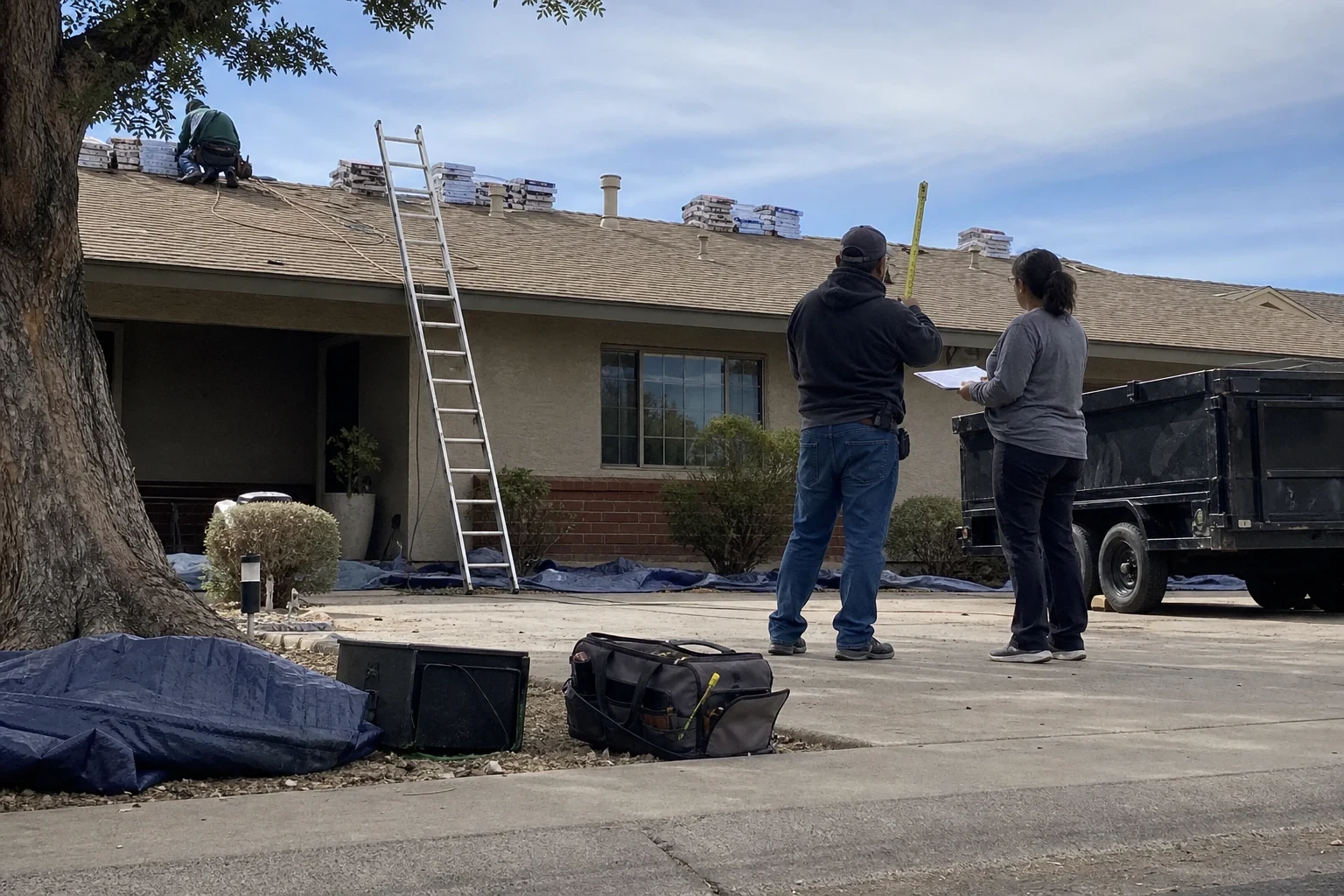
We climb the roof and check the attic, then share photos of the underlayment, signs of deck trouble, flashing and vents. If a roof inspection is all you want to start, we can begin with that.
- 2
Side-by-side written estimate
Each option that suits your home is itemized, with its expected lifespan and the upkeep it will need. The choice is yours, and we do not steer you toward the most expensive one.
- 3
Permit and start date
We obtain the permit and book a start date. During summer we start early so crews and materials avoid the hottest afternoon hours, and we check monsoon forecasts before opening any roof.
- 4
Tear-off and new roof
We cover plantings, shield the walls, remove one section at a time and dry it in that same day. A typical single-family home takes a few working days, and tile takes longer.
- 5
City inspection and walk-through
Once the city signs off, we go over the roof and yard with you and give you photos of the completed job, including the layers now covered up.
What Drives the Cost of a Roof Replacement
We price each roof from its own measurements and condition, never from a standard chart. The written estimate lists every item below on its own line, and it shows how the up-front figure lines up against the expected years of service for each option.
- Roof area and slope
- The number of squares decides how much material is needed. A steeper roof calls for more safety gear and slows the work.
- Material and how long it lasts
- Architectural shingles are cheaper today but need replacing earlier than tile. Concrete tile costs more at the start and needs underlayment work from time to time. Foam on low-slope areas has to be recoated periodically.
- How much tile can go back on
- Lifting and relaying tile lowers material cost when most pieces are in good shape. When many are cracked or the profile is no longer made, new tile is required.
- State of the decking
- New sheathing is charged by the sheet, and the actual count shows up only after tear-off. Each replaced sheet is photographed.
- Roof features, solar and layout
- Skylights, chimneys, valleys and several roof planes all take more labor. Solar panels have to come off and go back up, which is usually arranged with your solar company.
Common Questions About Replacing a Roof
- Is it possible to reuse my existing concrete tile?
- In many cases. Concrete tile does well in desert conditions, so when most of it is whole we take it up, put in new underlayment and battens, and set it back with replacements where needed. That cuts material cost and keeps your home's appearance. We tally broken tile during the inspection so you know ahead of time.
- Which handles Buckeye heat better, tile or shingle?
- Tile releases heat more easily since air flows beneath it, and the tile itself has a much longer life. Shingles are cheaper at the start and simpler to repair, but sun exposure here wears them out faster than in gentler climates. Your budget and how long you will stay drive the answer, so we write out both options next to each other.
- How long does my roof stay open?
- We only remove as much as we can dry in by the end of that day, so your home is never open overnight. In monsoon season we look at the forecast every morning and wait on opening more sections if storms are expected.
- Does homeowners insurance cover a roof replacement?
- Policies usually pay for sudden damage like wind or hail, not for age or worn-out underlayment. When a storm is to blame, we photograph the damage and walk you through the steps, but coverage is your adjuster's call. See our storm damage repair page for more.
- Must I be home while you work?
- Only part of the time. We need attic access at the beginning and end, plus someone to go over the finished roof with us. Pets do better indoors or elsewhere during the loud tear-off days.
Choose a Roof You Will Still Be Glad You Picked
We will inspect your roof, show you what we found and lay out the options with cost and lifespan side by side. Homeowners in Buckeye, Goodyear, Litchfield Park and Surprise can schedule a visit.