ServicesRoof repair
Buckeye Roof Repair Matched to Your Roof's Remaining Years
Our crews fix tile, shingle and low-slope roofs throughout Buckeye and the West Valley. Before pricing anything, we follow the leak or damage back to what caused it, then explain the repair cost, how long it should last and whether your money would do more somewhere else.
When Repairing Makes More Sense
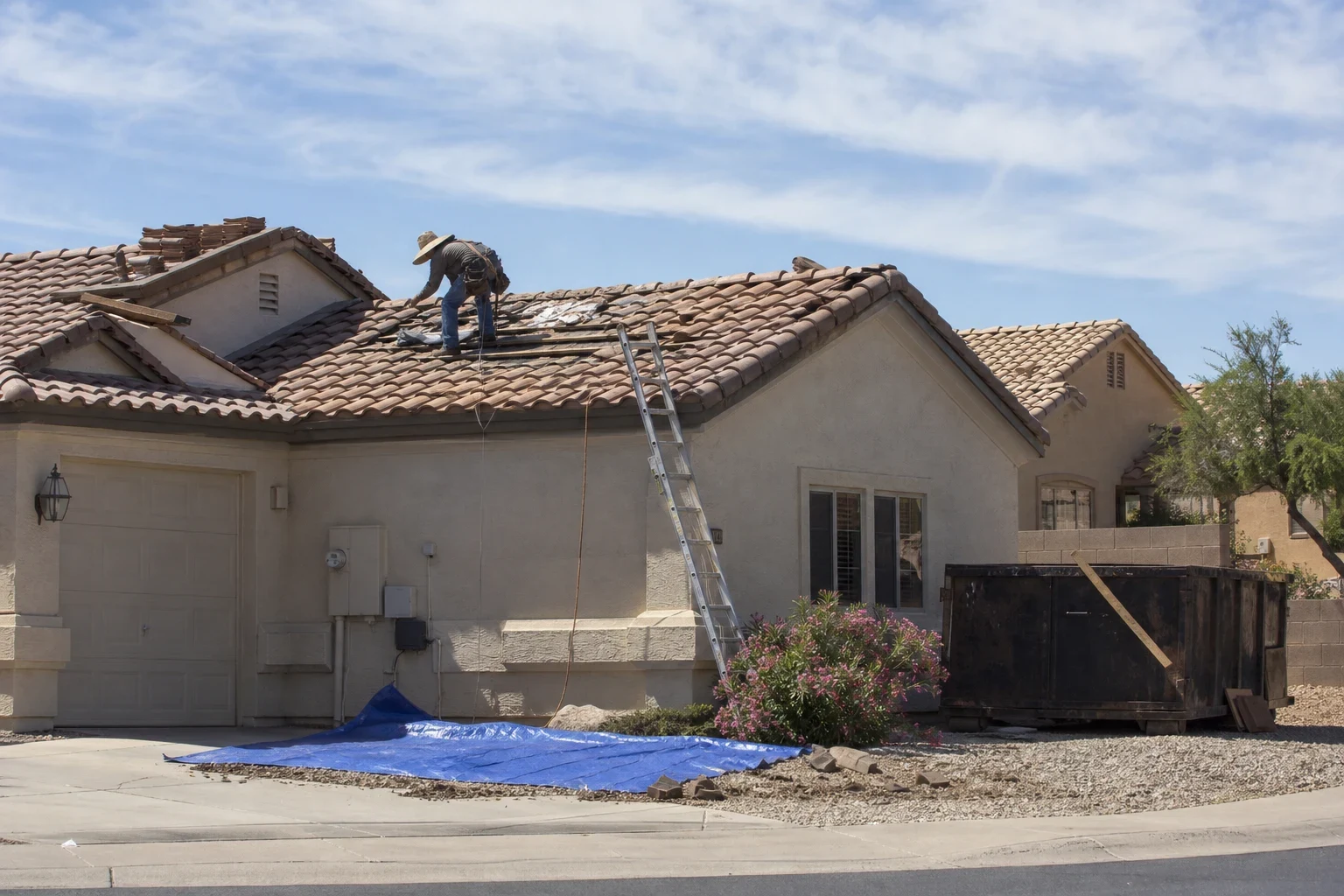
In Buckeye, most homes have concrete tile laid over underlayment, along with some asphalt shingle and low-slope foam or rolled roofing on patios and additions. The tile can hold up for decades. The first things to go are usually below it: felt that dries and cracks after years of attic heat, flashing that pulls away at walls and chimneys, and rubber pipe boots that split in the sun.
Repair is the right move when the damage sits in one area and the rest of the roof has plenty of life ahead. Swapping a few broken tiles, resealing flashing at a vent or relaying a single valley can add years at a small share of a full reroof's cost. If the underlayment has gone brittle across an entire slope, fixing one spot only shifts the next leak a few feet, and we will say so directly.
We want any repair we do to still seem like a smart choice five years later. That is why each quote comes with our straight estimate of how long the work should hold and what the surrounding roof will probably need next.
What Our Roof Repair Work Covers
Tile reset and replacement
We lift slipped or cracked concrete and clay tiles, replace broken pieces with the closest available profile and color, and refasten them so they lock back into the course. Matching older tile is not always exact, and we show you a sample before we install it.
Underlayment repair under tile
When the felt beneath the tile has torn or turned brittle in a section, we remove the tile, cut out the failed area, install new underlayment lapped correctly into the old, and relay the tile. We also check battens and the edge metal while the area is open.
Flashing and penetrations
Wall flashing, headwall and sidewall step flashing, skylight curbs, and pipe and vent boots are where most Buckeye leaks start. We replace cracked boots and rework or reseal flashing rather than smearing roof cement over the gap.
Shingle repairs
On shingle roofs we replace lifted or missing shingles, reseal tabs that have let go, and fix exposed nail heads that rust and let water track in.
Low-slope and patio roofs
Flat sections drain slowly and hold dust and debris. We repair blisters and splits in foam and rolled roofing, recoat worn areas, and clear scuppers so water leaves the roof instead of sitting on it.
Warning Signs That Call for a Repair
- New stains after monsoon rain
- A brown ring that appears on the ceiling after a summer storm usually means water slipped past the tile and through worn underlayment or a flashing seam. The real entry point is often several feet away from the stain.
- Broken or shifted tile
- Solar or satellite installers walking the roof, falling limbs and strong wind can crack tile or knock it out of place. Any gap in the tile row leaves the underlayment in direct sun, and it breaks down faster.
- Cracked pipe boots
- The rubber boots around plumbing vents stiffen and crack under our sun and heat. When the rubber opens, water follows the pipe right into the attic.
- Valleys filled with debris
- Wind and dust storms deposit sand, leaves and grit in roof valleys. That buildup traps water and forces it sideways under the tile edges in a hard rain.
- Granules washing out of downspouts
- On a shingle roof, lots of granules in the gutters means the asphalt below is becoming exposed. Isolated spots can be repaired; loss across the roof signals it is near the end of its life.
How a Repair Visit Runs
- 1
Inspection and tracing
We check the attic for staining and daylight, then go up and follow the water path back to its source. You get photos of what we found and where.
- 2
Written repair quote
The quote lists each item, the materials, and our estimate of how long the repair should hold. If the roof is close to needing replacement, we say so and show you why.
- 3
Repair day
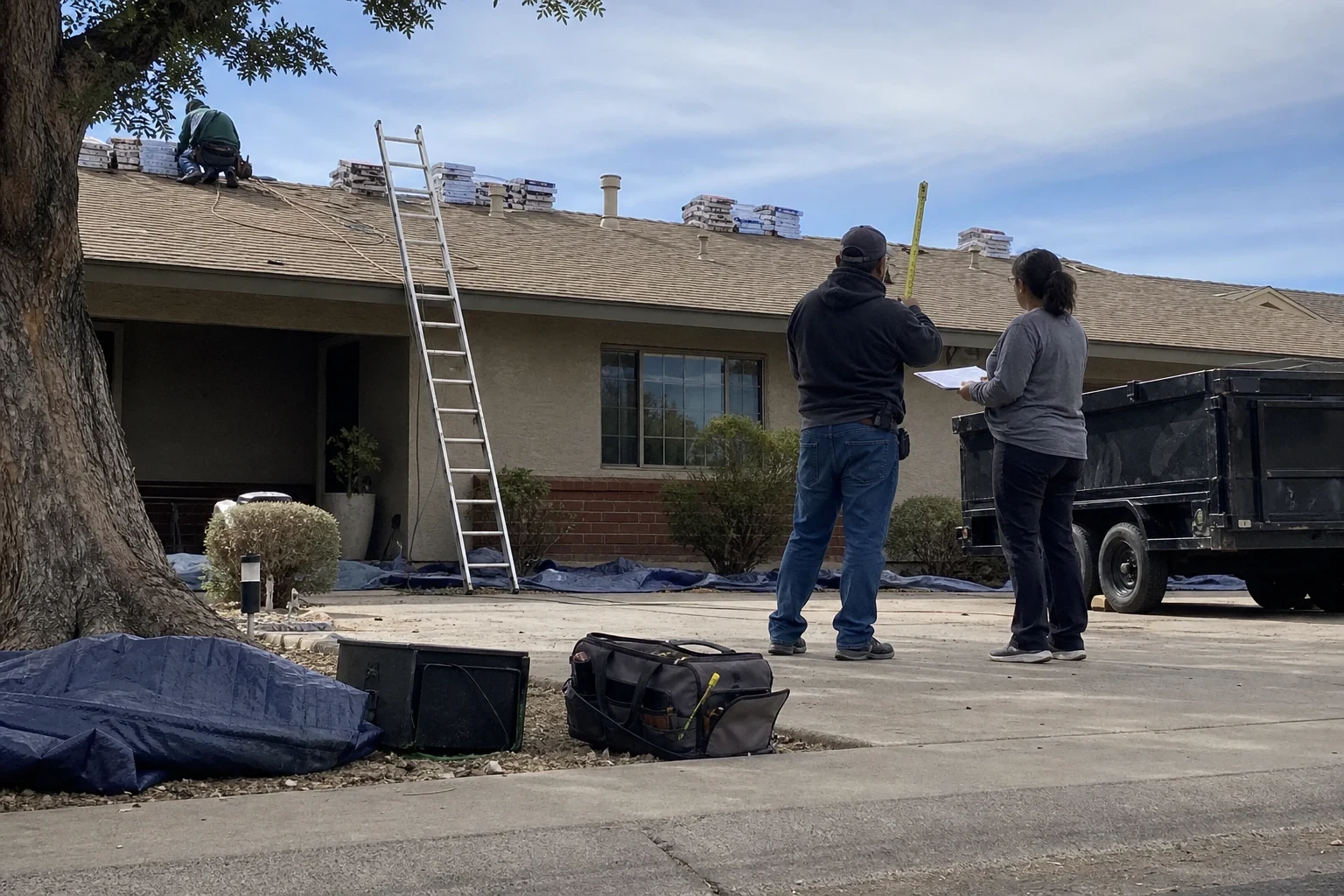
We set ladders away from plantings, stage tile carefully so it is not cracked by foot traffic, and complete the repair with materials suited to the roof. Most single-area repairs are finished in one day.
- 4
Cleanup and photos
We remove broken tile, old underlayment and nails, sweep the yard with a magnet, and send you before-and-after photos of the finished work.
What Moves the Cost of a Roof Repair
The price depends far more on what is under the surface than on the size of the stain inside. We quote after we have seen the cause, and we compare the repair cost against the years it should add so you can judge it as an investment, not just a bill.
- Roof material
- Tile repairs take more labor because tile must be lifted, stored and relaid without breaking. Shingle and flat roof repairs are usually quicker to reach.
- Condition underneath
- If the underlayment, battens or roof deck are damaged, the scope grows. We will not know the full extent until the tile is off, and we tell you before we do anything beyond the quoted work.
- Matching materials
- Discontinued tile profiles or colors can be hard to find. Sourcing salvage tile or a close substitute can affect both cost and timing.
- Pitch, height and access
- Steep slopes, two-story homes and roof areas over pools or tight side yards need more setup and safety equipment.
Roof Repair Questions We Hear
- My tile looks fine. Why does my roof leak?
- Concrete tile is mostly a sun and wind shield. The waterproof layer is the underlayment beneath it, and in our heat that layer can dry out and crack long before the tile shows any wear. That is why we lift tile to see what is underneath rather than judging the roof from the ground.
- How do I know whether to repair or replace?
- We look at how much of the roof is affected and how much life the rest has left. A repair that costs a small share of a reroof and buys several more years is usually worth doing. If we expect the next leak within a season or two, we will show you that comparison and you can look at our roof replacement page for what that involves.
- Can you repair a roof before monsoon season?
- Yes, and spring is a good time for it. Repairs done before the summer storms let underlayment and sealants go in under dry conditions, and you avoid finding the problem during the first heavy rain.
- Will my repair match the rest of the roof?
- We bring sample tiles or shingles so you can see the match before installation. New tile is often a shade brighter than tile that has spent years in the sun, and the difference usually softens as it weathers.
- Is storm damage handled differently?
- If wind or hail caused the damage, you may have an insurance claim. Our storm damage repair page explains how we document that damage with photos for you and your adjuster.
Repair the Real Cause and Know What Comes Next
We work in Buckeye and nearby West Valley towns, including Goodyear, Avondale and Litchfield Park. Let us know what you are noticing, and we will schedule a time to check it.